Project L-and member Eastside farm have been busy implementing their most ambitious agri-environment scheme yet as part of their ongoing work towards Wildlife Estate accreditation.
We sit down with Jenny Cowan, part of the family who own Eastside Farm and a partner in their agritourism business This is Eastside, to discuss their nature restoration projects to date.
Firstly, please give us a little introduction to yourself and your farm. Where do you fit into the Project L-and FIRNS family?
I was lucky enough to have grown up at Eastside in the picturesque farmhouse nestled just below the West Kip summit. Throughout my childhood there was the constant chatter of guests as mum and dad ran a couple of welcoming holiday cottages alongside the working hill farm.
Having met my partner Michael while he was studying Architecture and I Landscape Architecture, we returned to Eastside together - both having been inspired by space-making, place-making, and then the comings and goings of the working farm.
Our family workload is split between the farm and the agritourism businesss. It certainly keeps life interesting as you could find us gathering sheep, cleaning cottages, lighting the guests’ wood-fired sauna, or digging ponds and planting trees on any given day. Both businesses complement each other, the farm allows us to give our guests a real sense of place, grow timber for biomass, generate electricity and provide us with beautiful spring water and grass-fed meats. Agritourism gives us a wonderful stream of guests, providing outside influence, fresh ideas, and a giving-back fund to reinvest in Eastside’s natural, cultural and built heritage.
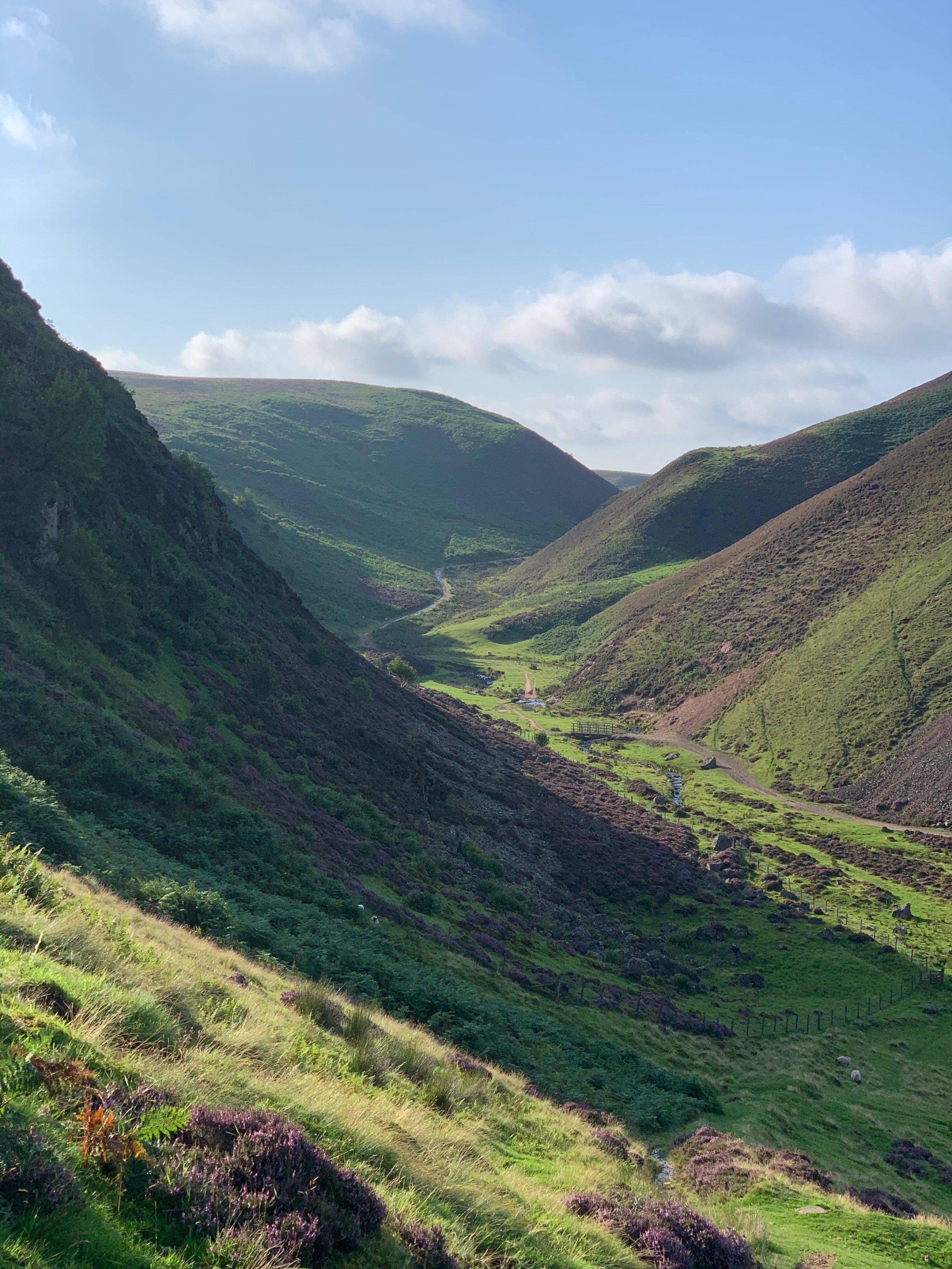
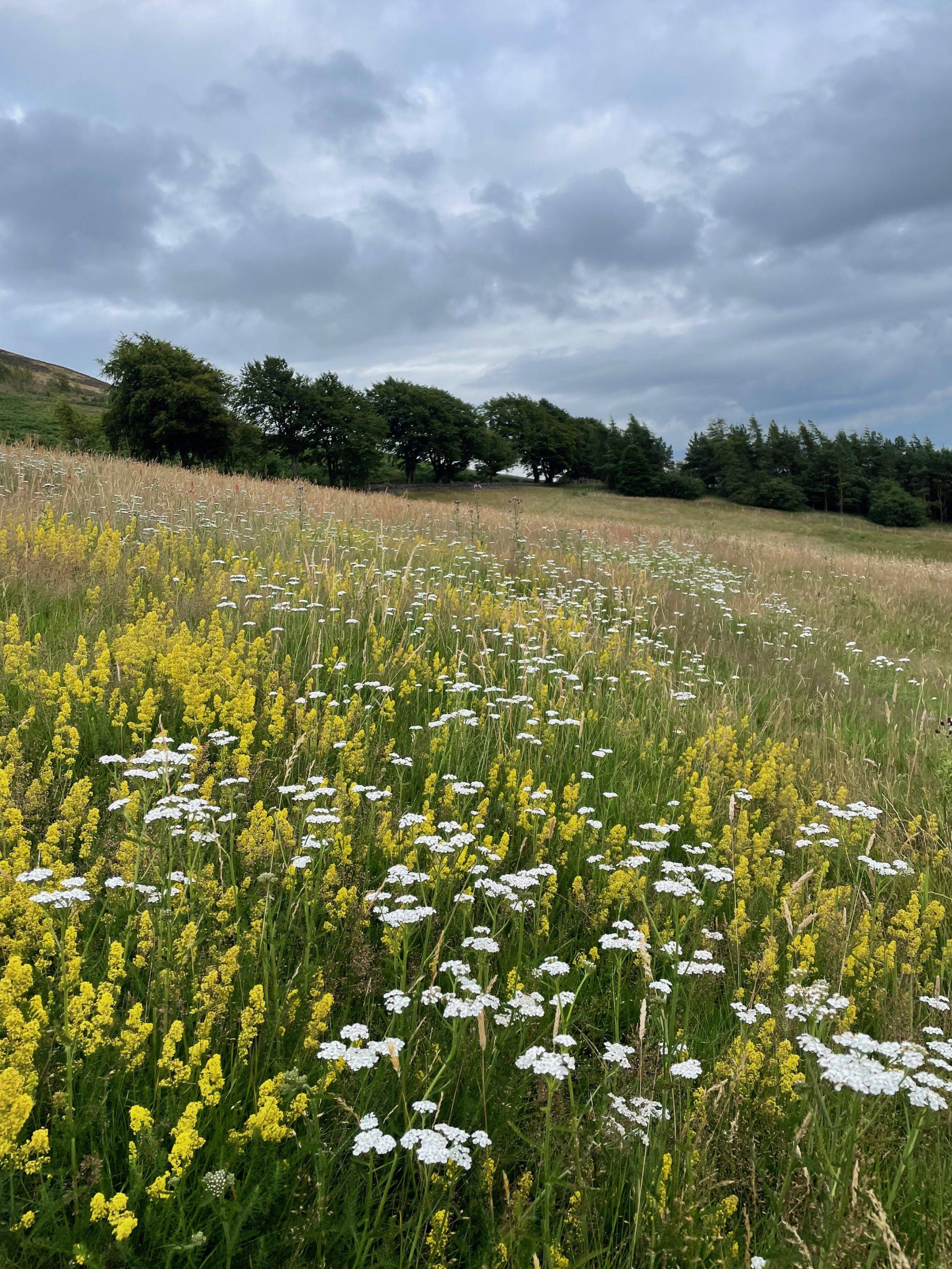
Eastside is a 1225ha family farm encompassing some of the best known peaks in the Pentlands; South Black Hill, Scald Law, and The Kips are iconic to the region. Eastside is a hefted hill sheep farm made up of seven historic hill hefts, where the ewes stay on their ‘home hill’ without fencing. The land is made up of a mosaic of dry and wet heath, unimproved grassland, a scattering of small farm woodlands and a SSSI for flora, lichens and bryophytes. The limited in-by fields are predominantly managed for species-rich grasslands, or used to manage grazing pressures on the hill. We have recently reintroduced wild bird seed strips as a small upland arable element to extend wild bird feeding sources into winter.
We were one of the founding Project L-and farms, alongside Easter Bavelaw, Baddinsgill, Cairns and Kirkton. As a cluster it has been exciting to work together on a landscape scale, with everyone bringing something unique to the table. As a group we have wide-ranging contacts, skills, and experience. Here at Eastside we are currently working on the branding, website, illustration and comms work for Project L-and, drawing on experience from our previous lives in design and web design.
Tell us about your Agri-Environment work and why it’s important?
Agri-Environment projects can be a fantastic springboard for farmers to understand the habitats and species on their farm and work towards ways to support these through a holistic management plan and funding channel.
Our previous projects had been reliant on desk-based habitat data but we were lucky enough to be in a position to self-fund a whole farm biodiversity audit this time. Three ecologists spent days studying habitat type and condition, noting species, taking photographs and collating data into a really powerful ground-truthed picture to inform future planning. This became the basis for the agri-environment plan that we are implementing now. The importance of bespoke plans for bespoke places can’t be overstated as each farm is unique in its land, management, expertise, aspiration and opportunity to fund change.
Our experience of agri-environment has involved collaborative working which is important when considering projects at landscape-scale (even within smaller projects). Collaboration and joined-up thinking can hugely increase the impact of individual actions. Working with our ecologists, partners at NatureScot who advise on the SSSI, scientists at Moredun who have advised on reducing fluke risk to stock, and with an important awareness of neighbouring projects via the farm cluster, we were able to form our most ambitious agri-Environment plan for Eastside yet.
Our key themes were;
- Farming with Nature
- insect superchargers - looking to the bottom of the food pyramid
- cores and corridors
- always building on biodiversity
- hydrology and slowing the flow
Within this 5 year program we have delivered;
- Upland scrub corridors, working with NatureScot to extend the scrub diversity of the Habbie Howe SSSI up the East Kip, into the moorland and to connect in with neighbouring Easter Bavelaw’s riparian planting down to the water’s edge at Thriepmuir.
- Began developing management for tall herbage communities
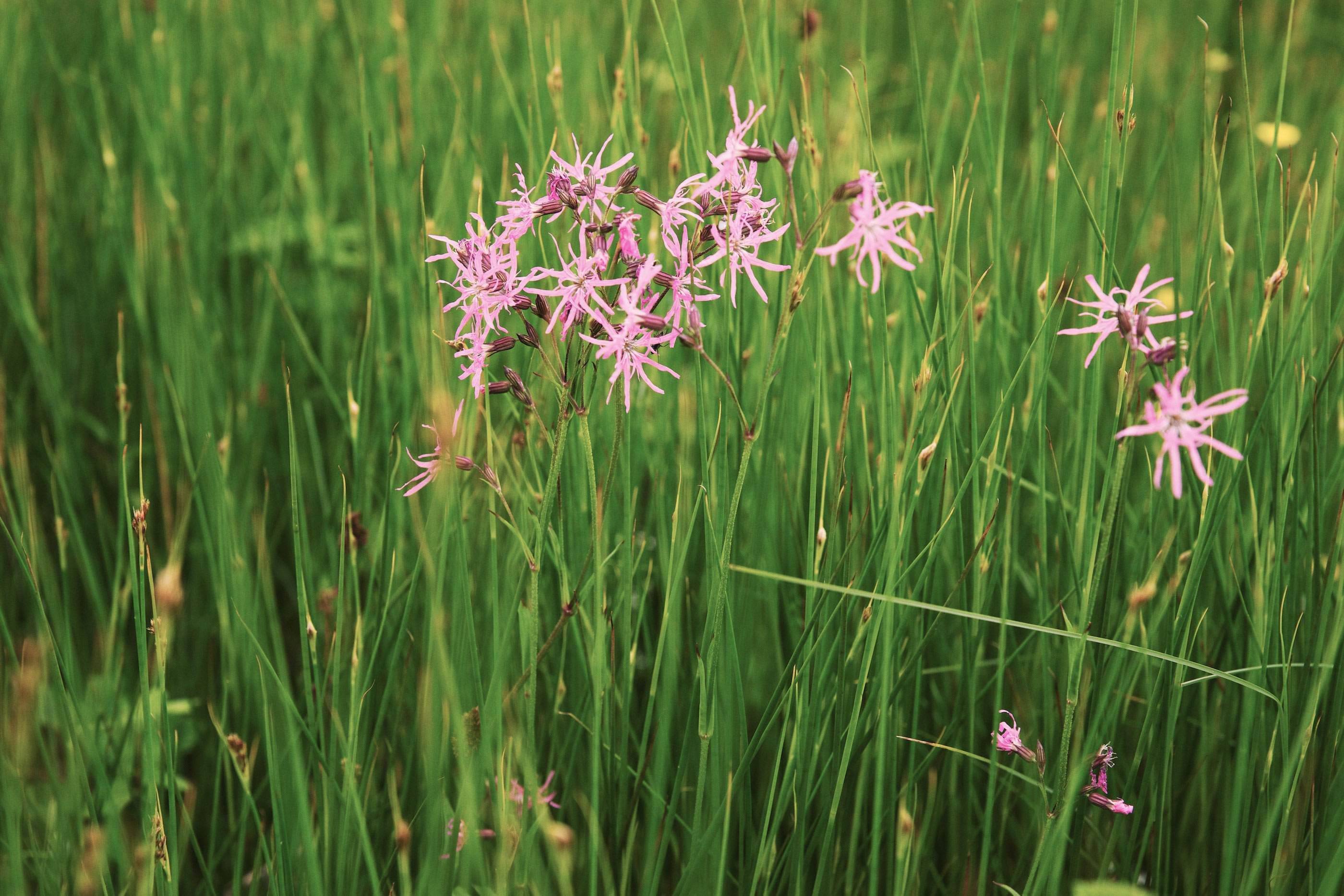
- Added to our area of habitat mosaic and species rich grassland management
- Added over 3.6km of waterside margins/ grazing management to slow the flow
- Planted 500m of hedging
- Dug 16 new wader scrapes
- Blocked 7 field drains for wetland creation
- Established 2 upland arable wild bird seed blocks
- Created a grazing management plan
- Organic farm management
Although hard graft for a small family business, the agri-environment framework has provided a toolbox for us to start working with nature in earnest. It has allowed us to build (year on year) nature and climate resilience, and has generated great joy as we see first hand how these projects can come together and how small businesses can make a difference.
You mentioned the farm has a SSSI. How long have you been working to conserve the natural environment at Habbies Howe? What’s next from this area?
My father has worked with NatureScot for many years to manage the SSSI, initially designated for its numerous plant species, thanks in part to its clash of geologies. Only part of the SSSI area is fenced so as to reduce both grazing and people pressure from the more erosion-prone waterfall. A grazing plan was reintroduced to allow sheep to keep the grasses in check and allow the lichens, bryophytes, and fungi to flourish.
Flora wasn’t the only wildlife to flourish; my father remembers the first peregrine nest in the SSSI, working with the nature agencies of the time to monitor the nest – with nest burglar alarm set up in the shepherds cottage! We’re happy that they are a much more common feature of the hills now with numerous nesting sites.
Last year in our meeting with NatureScot and our ecologist at the SSSI we discussed an opportunity to extend the naturally regenerated ‘scrubbing up’ of the waterfall area into the Green Cleugh, the Red Burn Cleugh, and the Huandean Burn Cleuch, all of which are showing signs of rowan and birch regeneration. This was then woven into our plan and the fencing is now in place. ‘Seeding’ of the scrub will take place this winter. The family is planting a mix of aspen, blackthorn, birch, dog rose, rowan, hawthorn and juniper.
The upland scrub will act as an insect supercharger, creating rich feeding corridors into the moorland and grasslands as well as connecting back down the hill to Threipmuir via the riparian woodland on Easter Bavelaw. The richness of plant life in the area means that this is very much phase one, developing the biodiversity and meandering river is an exciting project for the future.
Are there any other large nature enhancement projects in the pipeline? How have you progressed with these?
As part of Project L-and we have many potential projects in the pipeline (such as within the Green Cleugh) that we have been lucky enough to be progressing through FIRNS and in collaboration with our neighbours. Most of these would not fit within the agri-environment structure, so alternative funding sources need to be found.
One of the most exciting of these potential projects is a plan to decommission a small, dammed reservoir to create a string of large waterbodies and wetlands, re-wiggling the straightened burn channel, reconnecting it to its natural watercourse, and building in hides to allow for public viewing without disturbance. Inspiration was found from the RSPB who have control of water levels at one of their reserves to allow the water to rise or fall depending on the seasons and needs of the birds and wildlife.
Eastside’s potential projects range from peatland restoration, to woodland, from wetlands to species-rich grasslands, tall herb communities, scrub, hedges and forest pasture alongside our farming and tourism.
Do you have any advice for other landowners who might be considering similar projects?
Get good advice from an imaginative team that understand farming but are not afraid to think outside the box and push your thinking. Big plans can be broken into bitesize, manageable pieces.
If the agri-environment framework is not working (they often don’t for numerous reasons and can be limited in their scope, and in England have been scrapped for the moment entirely), then there may be other ways to make nature projects happen and we are in the process of exploring these avenues. Our experiences tell us that alternative options are not necessarily easy or straight-forward and can be difficult to justify financially. Most hold risk, are complex, or require significant monetary or time outlay – but we continue to investigate and hold out hope for this nascent market.
As natural capital markets evolve we hope the process of funding ecological schemes will become simpler and less risk-prone. This must happen in order for vital action to be taken in the face of the climate and biodiversity crisis we all face.
Collaboration is a wonderful (and essential) tool in pooling resources, contacts, and information. I cannot thank the Project L-and cluster enough for opening doors, asking questions and allowing us to be part of a national debate that we hope will be formative to policy.