Project Name: Baddinsgill Peatland Restoration (Phase 1)
Location: Baddinsgill Farm, West Linton, Scottish Borders
Area: 102 hectares of blanket bog
Consultation Period:
February – 30th June 2026
Feedback: Please make any comments online via the “Have Your Say” page by 30th June 2026
Introduction
Peatlands in good health are valuable carbon stores and important habitats with many benefits for people and nature: offering a clear nature-based solution to both the climate crisis and biodiversity loss. As such, peatland restoration is a key element of the Scottish Government's updated Climate Change Plan. Project L-and is working with Baddinsgill Farm to undertake a peatland restoration project on an area of 101 hectares of degraded peatland 3 miles north of West Linton, adjacent to Baddinsgill Reservoir.
Applications for funding for the restoration have been submitted to NatureScot’s Peatland ACTION. Peatland ACTION is a programme of works helping to restore damaged peatlands across Scotland, funded by the Scottish Government. If the funding applications are successful, it is hoped that the restoration works could be carried out in autumn 2026.
Consultation Requirement
We are sharing our plans early so that local residents, land users and neighbouring interests can ask questions and provide feedback before work starts.
The landowner intends to register the peatland restoration work on their respective land areas with the IUCN’s Peatland Code. The Peatland Code is a voluntary certification standard for UK peatland projects that validates and quantifies the climate benefits of peatland restoration and provides assurances that any climate benefits being claimed or traded are real, quantifiable, additional and permanent. A part of the Peatland Code’s validation process, is a requirement that project owners identify, notify and consult relevant stakeholders with regard to the proposed restoration project and take action to mitigate any identified negative impacts of the project on stakeholders where feasible and/or relevant.
We welcome you to review this consultation document which provides details of the proposed project. We do not anticipate that the proposed restoration project would have significant negative impact on any stakeholders. However, if you have any concerns regarding this proposed project, please contact us through the “Have Your Say” section of the Project L-and website. If the project is successful in proceeding, then further information on its progress and outcomes will be made available here.
Where is the project?
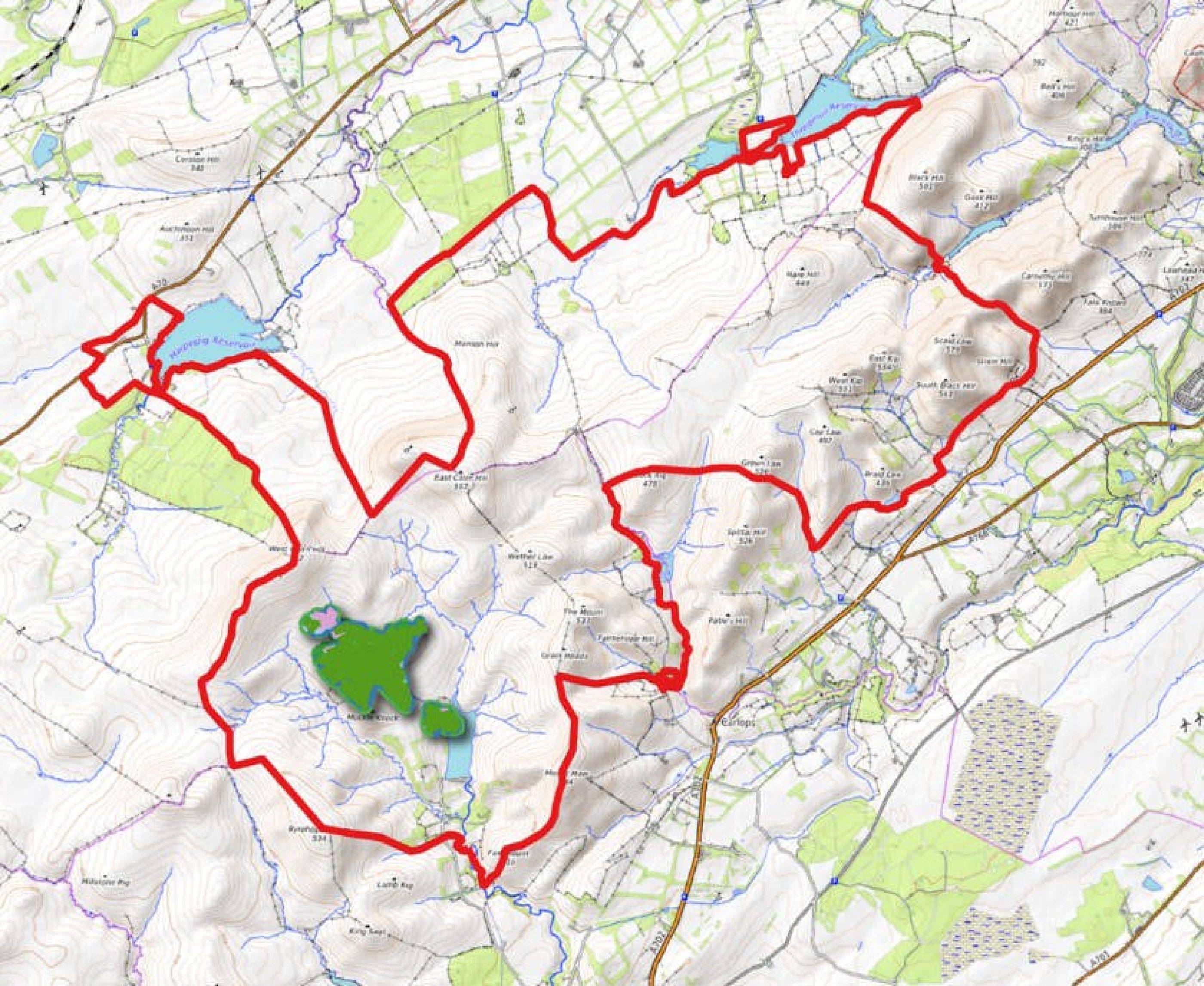
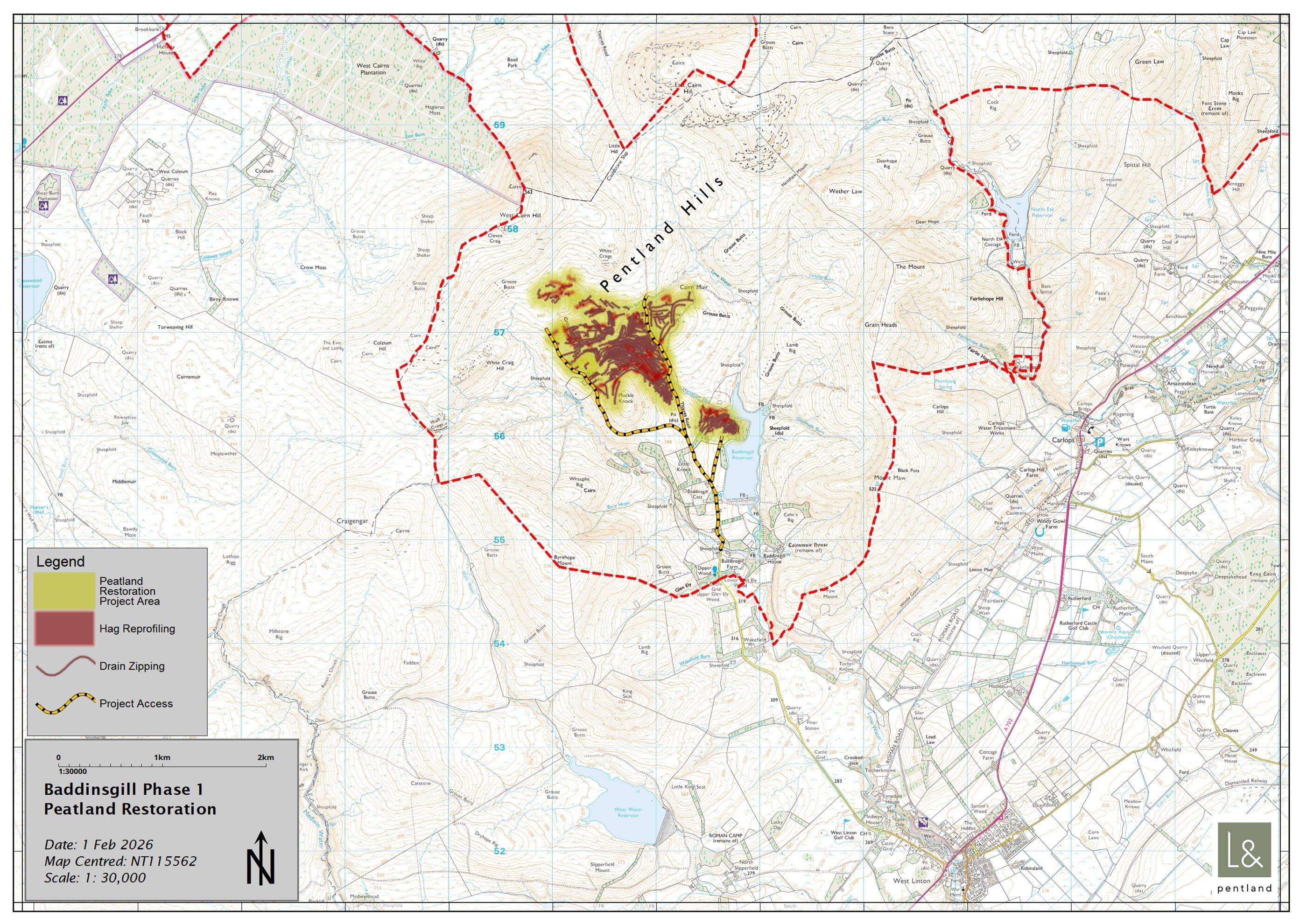
The project site is north-east of Baddinsgill Reservoir which is about 3 miles north of West Linton.
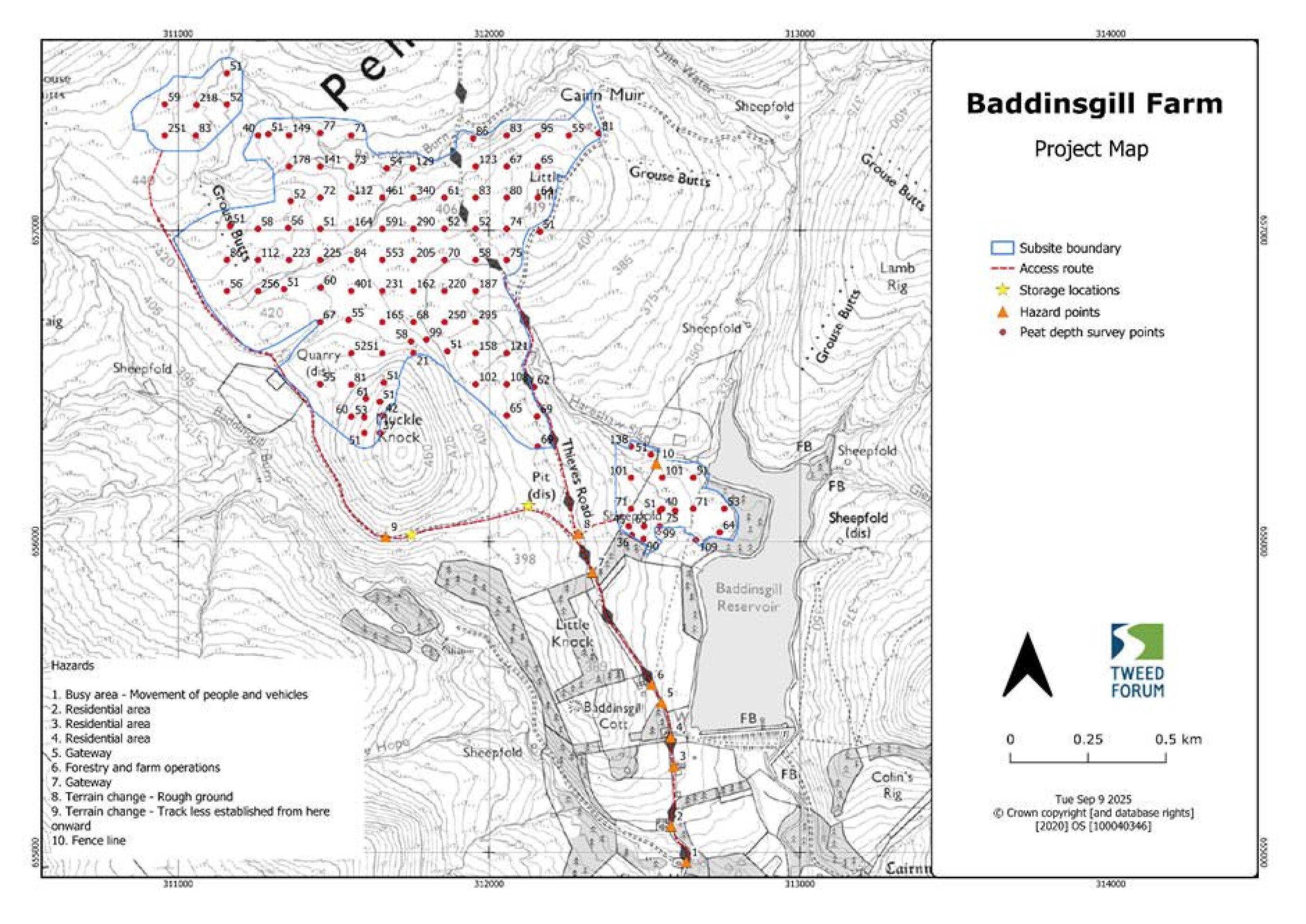
The project covers an area of upland blanket bog located between the north-west edge of Baddinsgill reservoir, Muckle Knock, Cairn Muir and White Craigs. There are three peatland blocks, totalling 102 hectares, located on upland blanket bog, with an elevation range up to 450 metres altitude.
The site has a central grid reference of NT 116 567
Why restore this peatland?
Helping tackle climate change
Peatlands are one of Scotland’s most powerful natural tools for tackling climate change. Although they cover only around 20% of Scotland’s land area, they store more carbon than all the UK’s forests combined. For thousands of years, peat has locked away carbon safely in deep, waterlogged soils. When peat dries out and erodes, that stored carbon is released into the atmosphere as carbon dioxide – adding to climate change. Restoring peatlands will re-wet the bog, slow erosion, and allow the peat to begin storing carbon again, helping to turn this land from a carbon “leak” back into a long-term carbon sink.
Supporting wildlife and nature
Healthy peatlands are some of Scotland’s richest and most distinctive wildlife habitats. They support breeding birds such as curlew, snipe, golden plover and skylark, as well as dragonflies, beetles, and specialist plants like sphagnum mosses that are found almost nowhere else. These mosses are especially important – they act like natural sponges, holding water and slowly building new peat over time. By restoring the damaged bog, the project will create wetter, more stable conditions that allow these species to return and thrive, strengthening the area’s biodiversity for future generations.
Improving water quality
The Baddinsgill peatland lies within a drinking water catchment, which makes its condition especially important. Degraded peat can release sediment, colour and nutrients into burns and reservoirs, increasing water treatment costs and reducing water quality. Healthy peatlands act as natural water filters – slowing rainfall as it moves through the landscape and trapping sediment before it reaches streams. Restoring this bog will help stabilise soils, reduce erosion into watercourses, and support cleaner, clearer water flowing into the local catchment.
Reducing erosion and flood risk
Damaged peatlands can shed water very quickly after heavy rain, sending fast-moving runoff down slopes into burns and rivers. This can worsen erosion locally and contribute to flooding further downstream. Healthy bogs behave differently – their sponge-like surfaces soak up rainfall and release it slowly over time. By blocking old drains and repairing eroding peat, the land will begin to hold water again, helping to slow runoff, reduce erosion, and play a small but important role in natural flood management.
Access considerations
The Cross Borders Drove Road recreational route, also known as the “Thieves Road” passes through the site.
Site traffic for the restoration site will largely avoid this route and will instead use the existing farm hill track that runs along the southwest of the site. See Project Map.
There are no planned path closures. No new drains, tracks or permanent hard surfaces will be created.
Proposed work
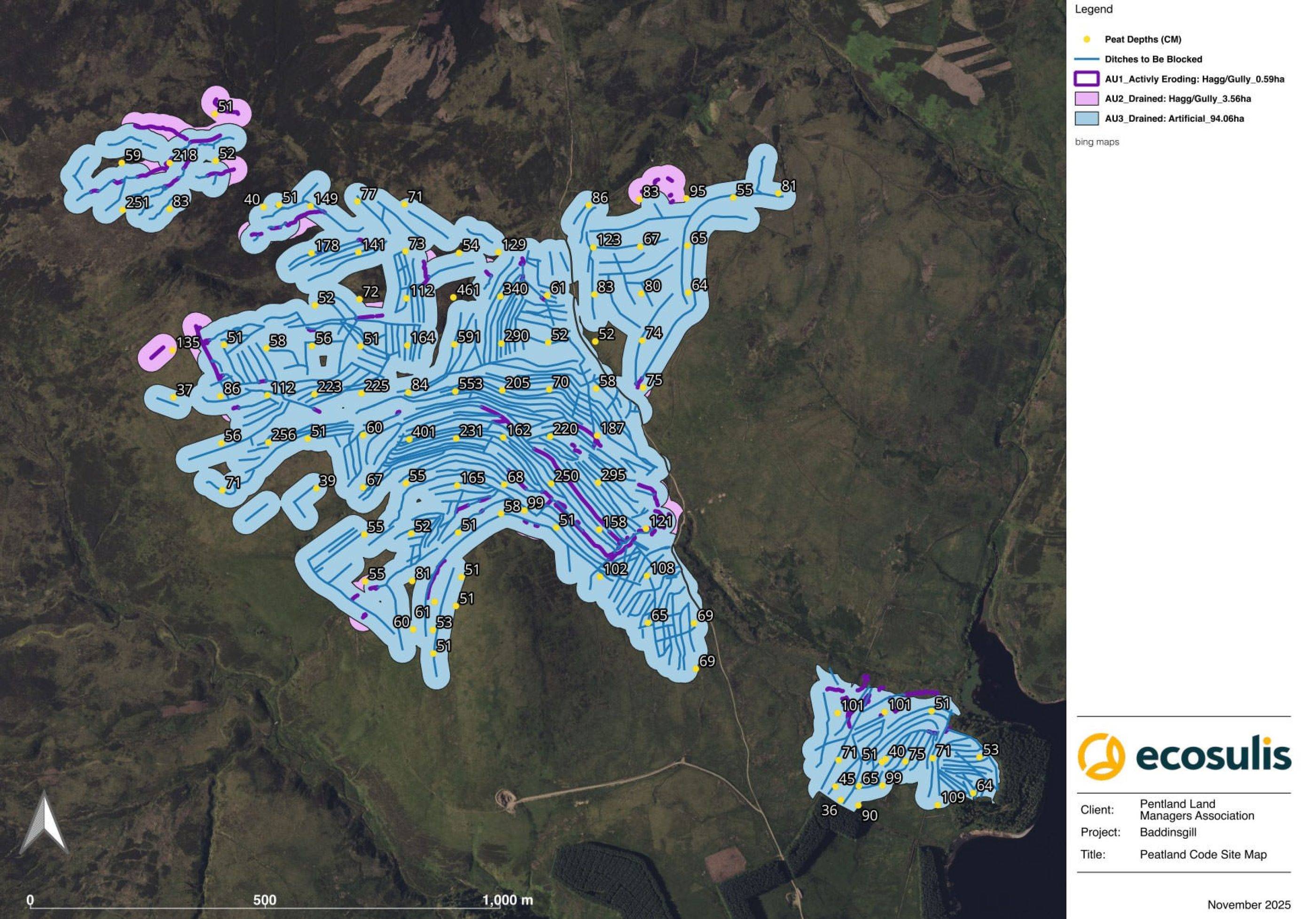
The areas include drained, modified and actively eroding peatland. Without restoration, these areas continue to lose peat and carbon.
Restoration will take place in autumn 2026 and will include:
- Blocking historic drains using peat dams and stone where required
- Re-profiling peat hags and gullies to stabilise eroding edges
- Installing peat bunds and baffles to redirect water across the bog surface
- Re-vegetating bare peat using local donor material
What will the restoration works look like on the ground?
During autumn 2026, specialist peatland restoration contractors will carry out work across the bog areas at Baddinsgill using wide-tracked, low-ground-pressure excavators designed specifically for peatland environments. These machines spread their weight so that they “float” across the bog surface, keeping disturbance to a minimum.
A major part of the work will focus on repairing historic drainage ditches with “wave dams”, a proven method known as the “zip and wave” technique. Many of the old drains cut across the bog act like open gutters, rapidly draining water away and drying out the peat. The zip and wave method repairs these drains in a natural and long-lasting way.
Instead of blocking drains only at a few points, the excavator gradually “zips” along the drain, pressing and folding peat back into the channel in a gentle wave-like pattern. This creates a continuous series of low peat bunds that follow the shape of the land, slowing the flow of water and allowing it to spill back out across the bog surface. The result is that water is spread more evenly across the peatland, rather than being channelled away down narrow cuts.
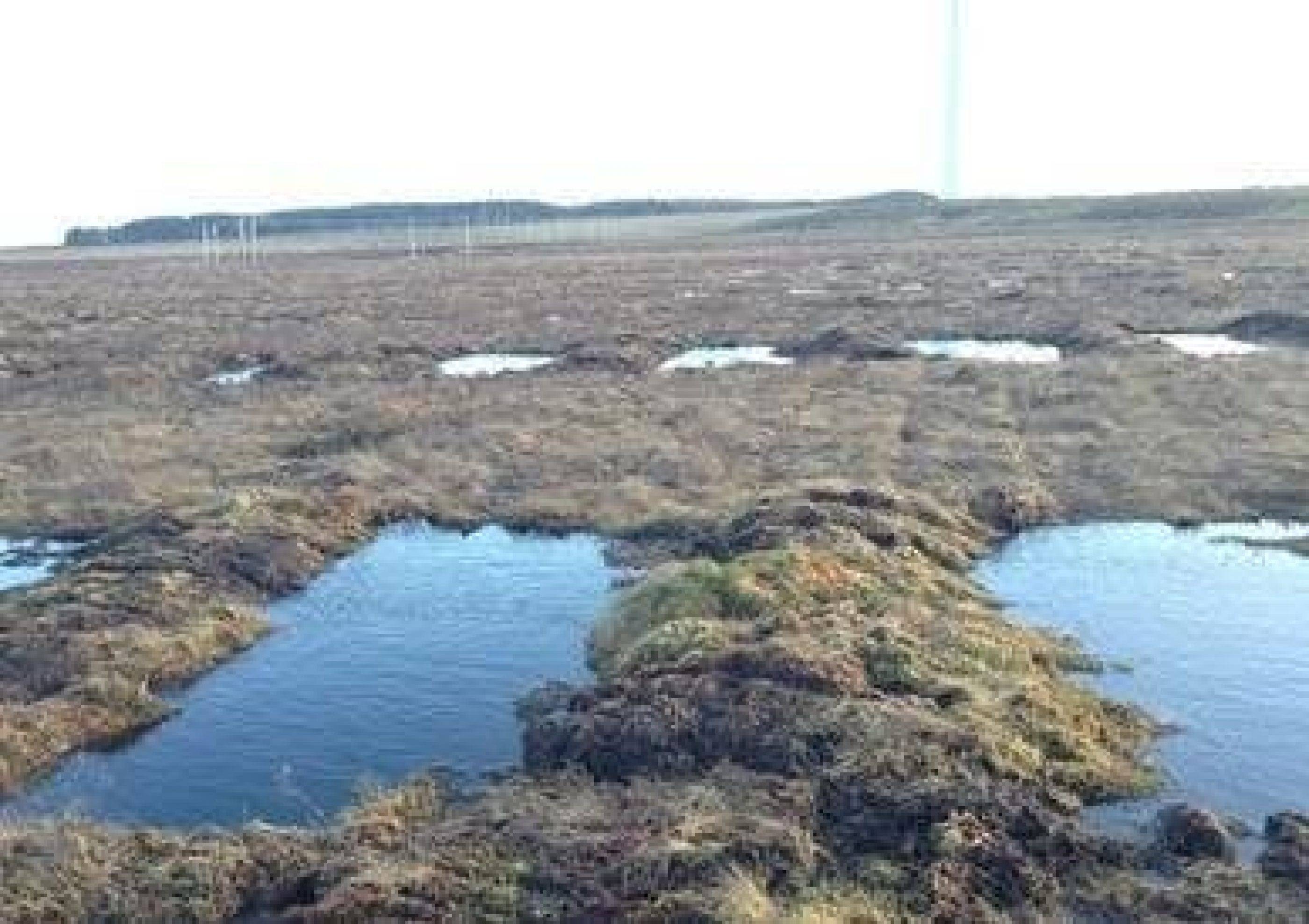
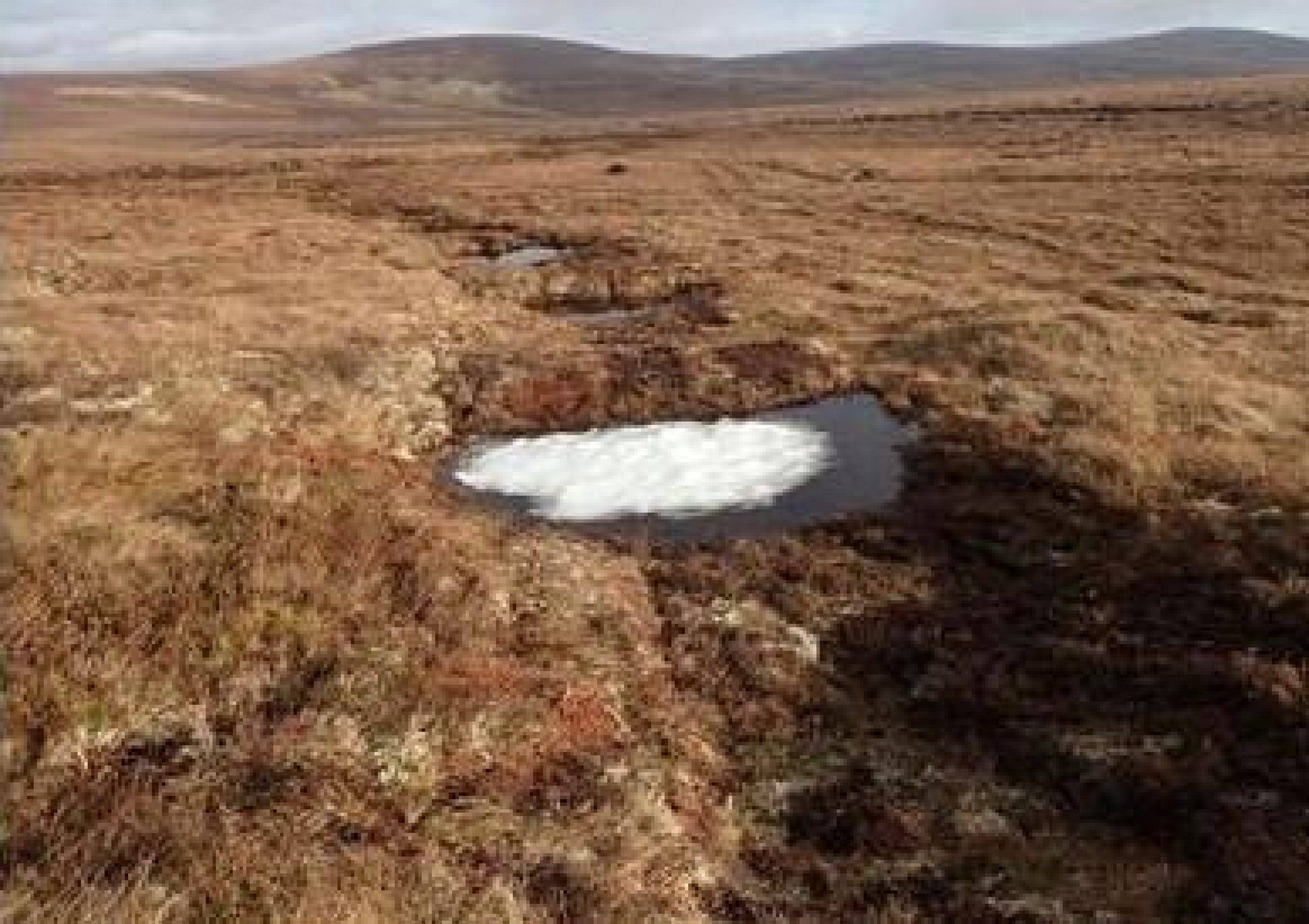
Left: Wave dam within a wider landscape / Right: Close-up view of a wave dammed drain
Where deep gullies and peat hags have formed, the sides will be carefully reshaped to make them more stable and less likely to collapse. Exposed peat will be covered using vegetation and turf taken from nearby donor areas, helping mosses and plants to re-establish naturally and protecting the peat from further drying and erosion.
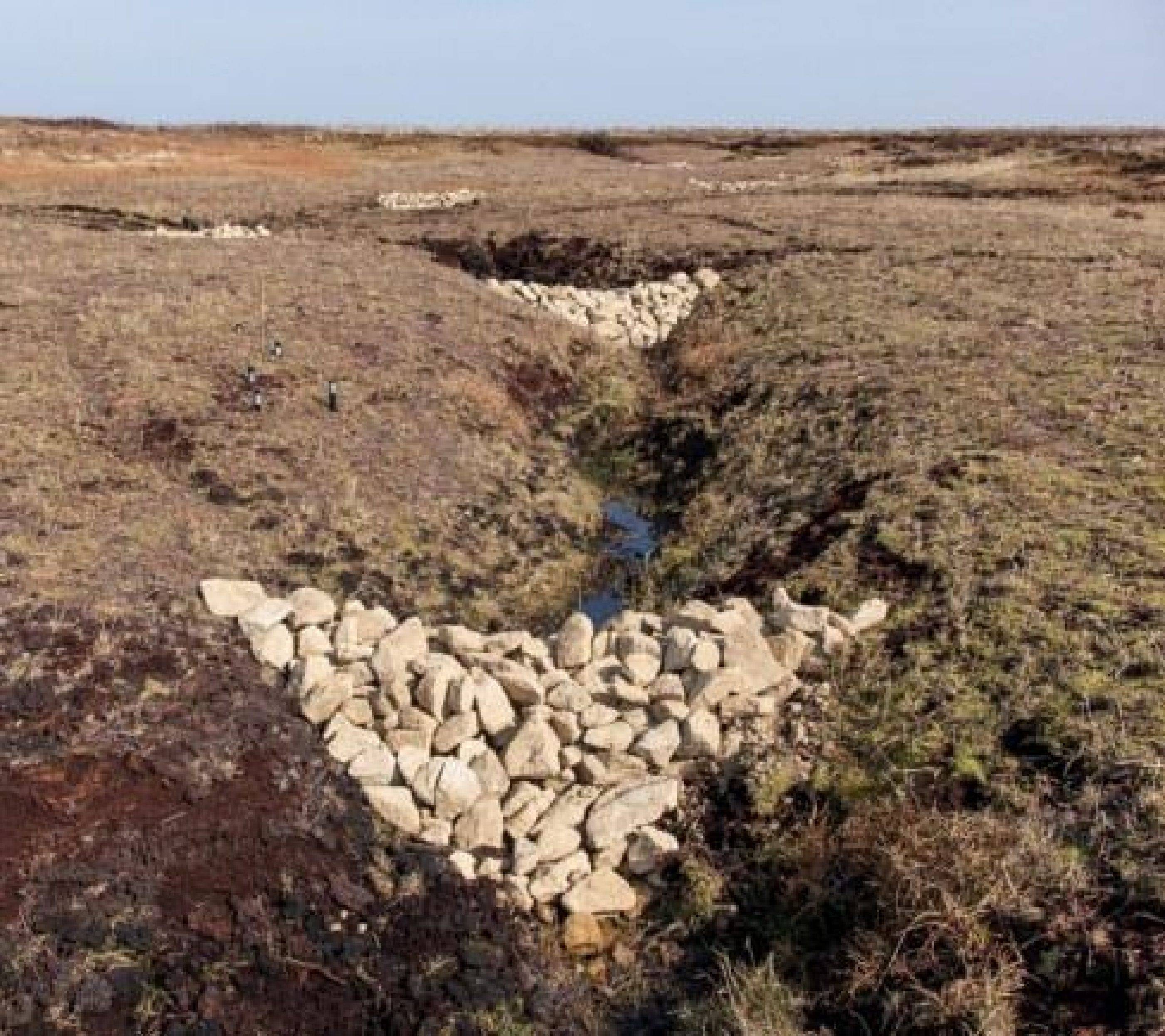
In a small number of deeper historic drains, that have eroded down to solid stone, locally sourced stone will be used to build robust, leaky stone dams. These allow water to pass through slowly while preventing further erosion and damage to the peat. Stone for some dams will be taken from an existing quarry on the farm, accessed by existing hill tracks.
Example of standard stone dam.
Once machinery leaves the site, the peatland may look temporarily disturbed in places, but it will be left to recover naturally. Over time the repaired drains will soften back into the landscape, vegetation will return, water levels will rise, and the hill will gradually take on the look and feel of a healthier, wetter blanket bog again.
When will works happen?
-
Complete
Planning notification
-
January to June 2026
Public consultation
-
Spring – Summer 2026
Funding confirmed, final surveys and permissions
-
September – October 2026
Restoration works
-
Ongoing
Monitoring & aftercare
What might people notice?
Access & recreation
- No path closures
Traffic & noise
- Occasional movement of excavators on low-loaders
- Use of existing hill tracks
- Short-term noise during daytime working hours only
Water & environment
- The site lies within the Baddinsgill Reservoir drinking water catchment – Scottish Water has been consulted
- Works will follow best-practice sediment and pollution control
- Nearby protected habitats such as the Lynslie Burn SSSI will be excluded from machinery access.
Farming & sporting interests
- Sheep and cattle grazing will continue
- No permanent fencing is proposed
- Stalking and sporting use will be coordinated to avoid disruption.
How is the project funded?
The restoration work is funded primarily by NatureScot’s Peatland ACTION programme. The project is also being registered under the Peatland Code, which means:
- Independent validation of restoration work
Long-term monitoring
Ongoing public contact availability
How to give feedback
We welcome comments from residents, neighbours, land users and community groups.
Online: Please make any comments via the “Have Your Say” page on the Project L-and website by 30th June 2026
In person: A drop-in session will be held at New Church Hall, West Linton from 1.30pm to 6pm.
All comments will be recorded, considered, and summarised (anonymously) as part of the Peatland Code validation process and shared on the Project-Land website.