Rabbies, RHET, and Nature-Friendly Farming
School trips are a rare occurrence these days. For many adults, some of their fondest memories of school will involve trips to the zoo, or a museum, or botanic gardens. These experiences often form core childhood memories and can have a significant and long-lasting impact on a child’s perception of the world.
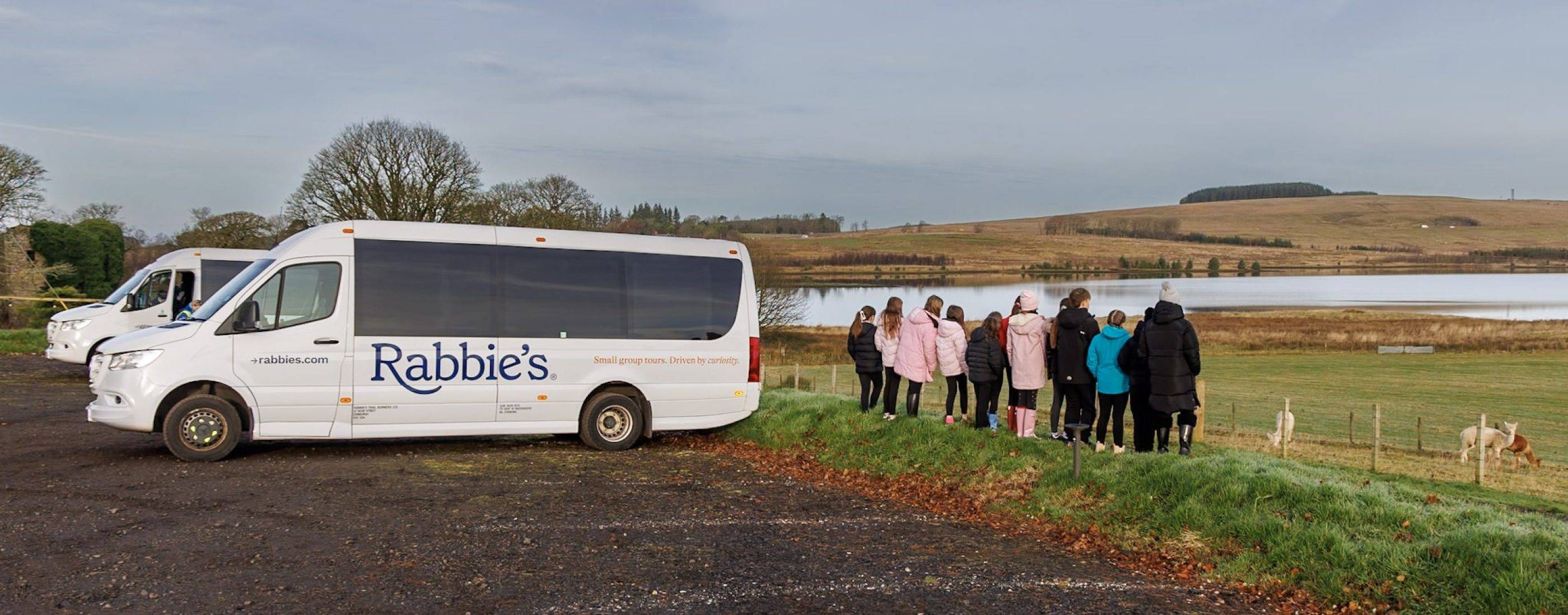
Today, the Scottish Government encourages schools to embrace outdoor education through their Learning for Sustainability Action Plan. However, the reality is that in order to expand children’s outdoor experience they need to be taken into the rural environment, and the costs of transporting pupils anywhere is often prohibitively expensive. We knew that we wanted to work with the Royal Highland Education Trust (RHET) to run some education days, and their Festival of Farming was an excellent opportunity for us to test out our first event, but we were at a loss as to how to get the children from their schools to Cairns Farm near Kirknewton. Thankfully the wonderful team at Rabbie’s Tours stepped in and offered to transport groups of children from five West Lothian schools completely free of charge. Rabbie’s are committed to responsible travel, and frequently support causes that nurture Scotland’s natural environment so that it can be enjoyed by future generations. Their drivers are also a fabulous bunch who embraced the spirit of the day with great enthusiasm and humour.
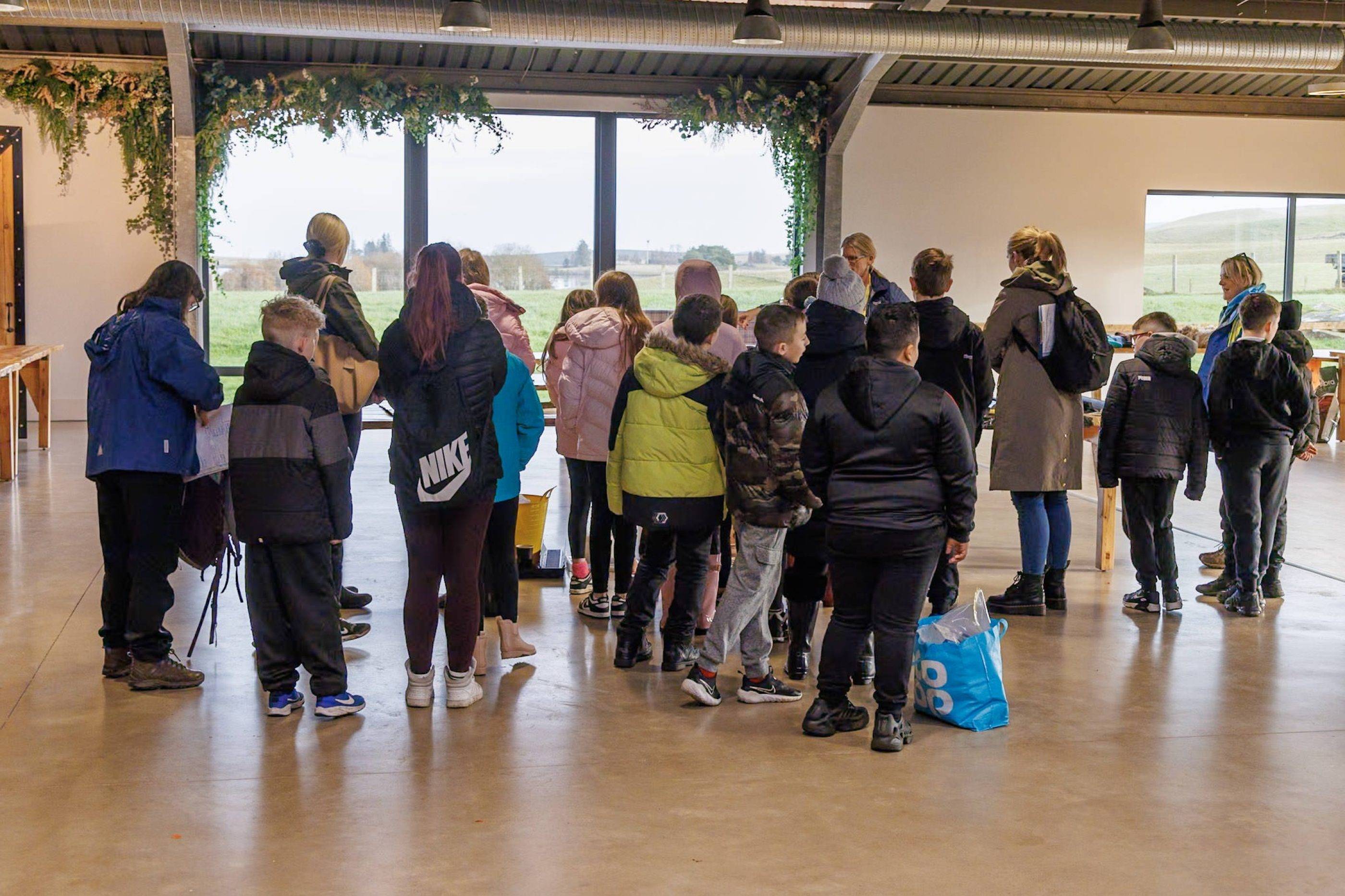
As the Rabbie’s buses full of children and teachers approached Cairns Farm and Estate on a chilly, sunny November morning they were greeted by stunning views of Harperrig Reservoir surrounded by autumnal trees, set against the backdrop of the Pentland Hills. Inside, there were five stations for the classes to visit, each focussing on a different aspect of nature-friendly farming.
Forestry
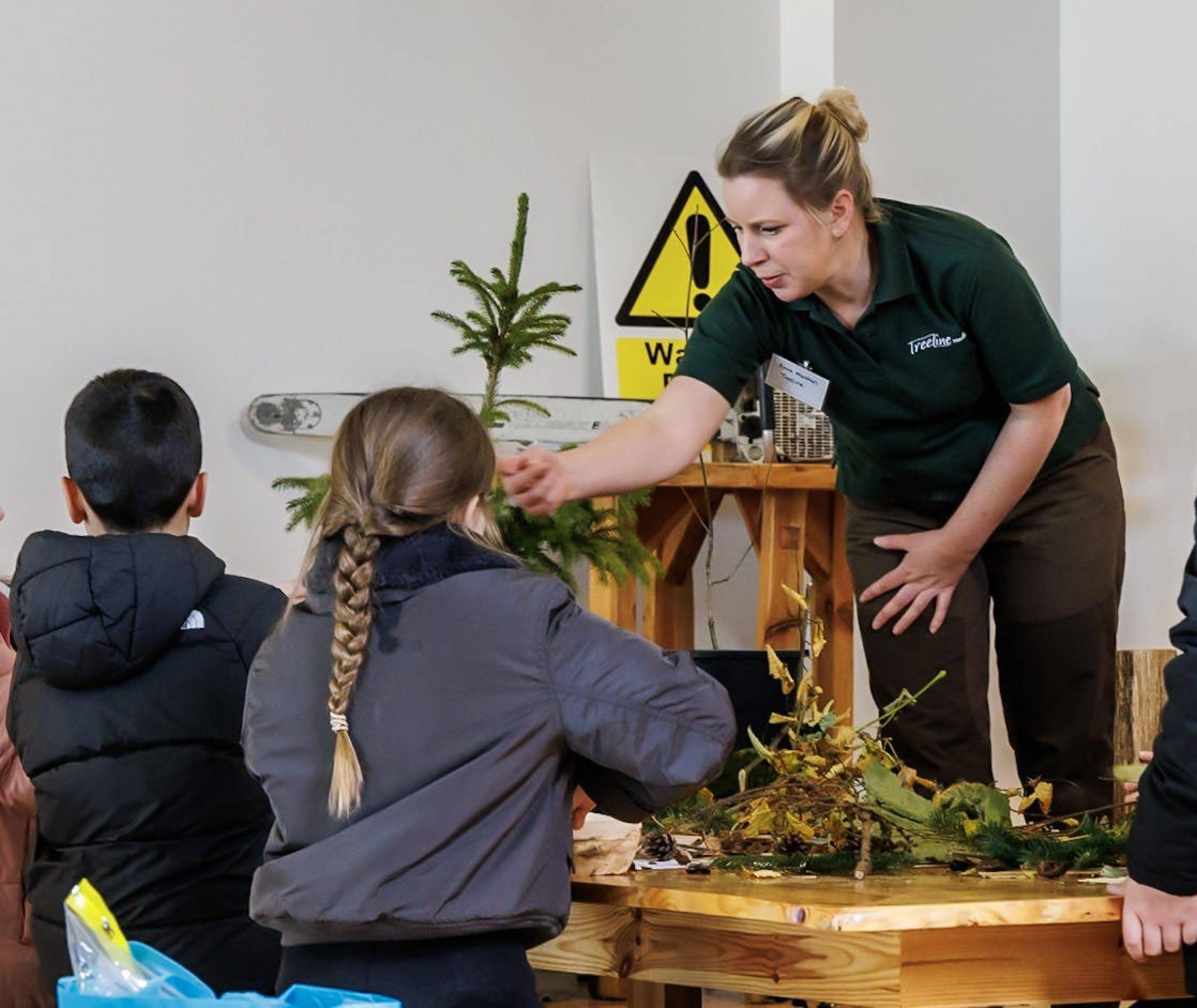
Anna Marshall from Baddinsgill Farm, representing Treeline Woodlands, helped the children to identify deciduous and coniferous trees.
The pupils also planted locally sourced Silver Birch and Scot’s Pine seeds in biodegradable newspaper pots to take away and plant at home. Anna commented “My favourite moment was watching one child’s face light up when they recognised a Horse Chestnut leaf. They knew that’s where conkers came from and they were so pleased that they had this knowledge. However, out of the dozen different leaves on the table that was the only one that the children were consistently able to identify- even Holly which I thought would have been an obvious one, proved elusive. It just goes to show how much work we need to do to build children’s understanding of our natural world”.
Nature restoration for bird preservation
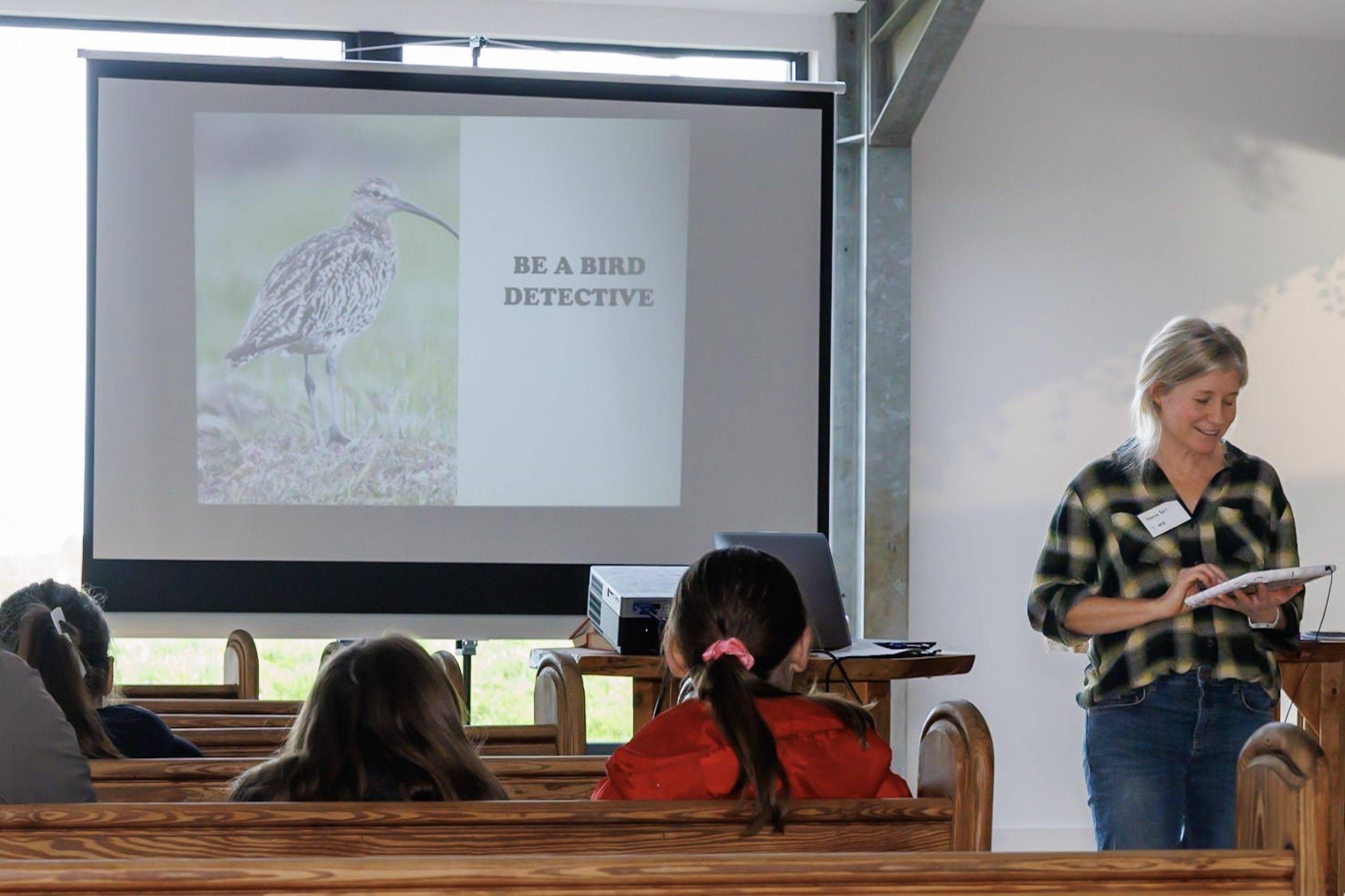
Rebecca Barr from Easter Bavelaw Farm brought a selection of native birds, in fluffy toy form including:
- Lapwing
- Song thrush
- Tawny owl
- Green finch
- Barn swallow
- Ringer plover
- Green woodpecker
- Mallard
- Goldfinch
- Chaffinch
- Cuckoo
- Great spotted woodpecker
The kids enjoyed using the Merlin app to identify their calls and learned about how farmers are working to restore the natural environment to encourage native birds.
Peatland restoration
Kate Hookam from Do Learn ran a fun and messy STEM workshop exploring the impact of drainage on peatland.
The children learned about the importance of Scotland’s peat bogs and got hands-on, building dams to block ‘drainage ditches’ and guttering to redirect water back into the peat. Here in Scotland 70% of our drinking water drains off of peatland and our peatland areas store vast quantities of carbon, around 1.6 billion tonnes, the equivalent of 140 years' worth of Scotland's total annual greenhouse gas emissions. In areas where peat continues to form it helps to offset the effects of human activities (such as fossil fuel burning). However, peat grows incredibly slowly, only growing 1mm per year, and much of our Scottish Peatlands have been degraded due to drainage. In the past drainage ditches were often built into peatland to allow access and grazing. Luckily, peat can easily be restored within 5 years by filling in some of these drainage ditches.
The children also discussed the experiences of conservationists on Shetland who attempted to use machinery such as tractors and diggers to quickly fill drainage ditches. These heavy machines sank into the peat bogs, and the conservationists had to seek help from the local fishing industry to build rafts out of waste pipe used by the salmon farmers. The children experimented with making their own miniature rafts to help some mini diggers cross bogland.
sheep & food production
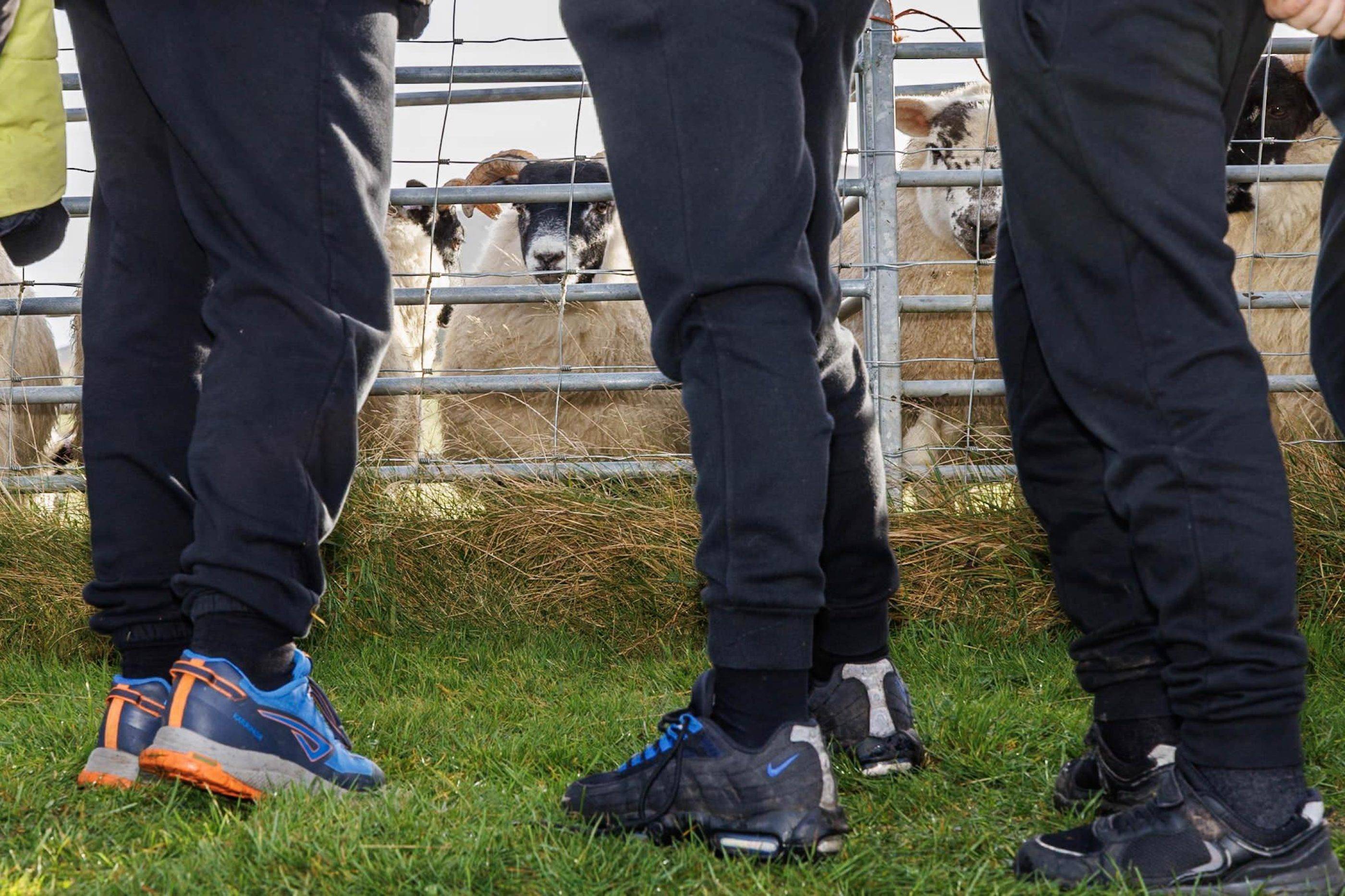
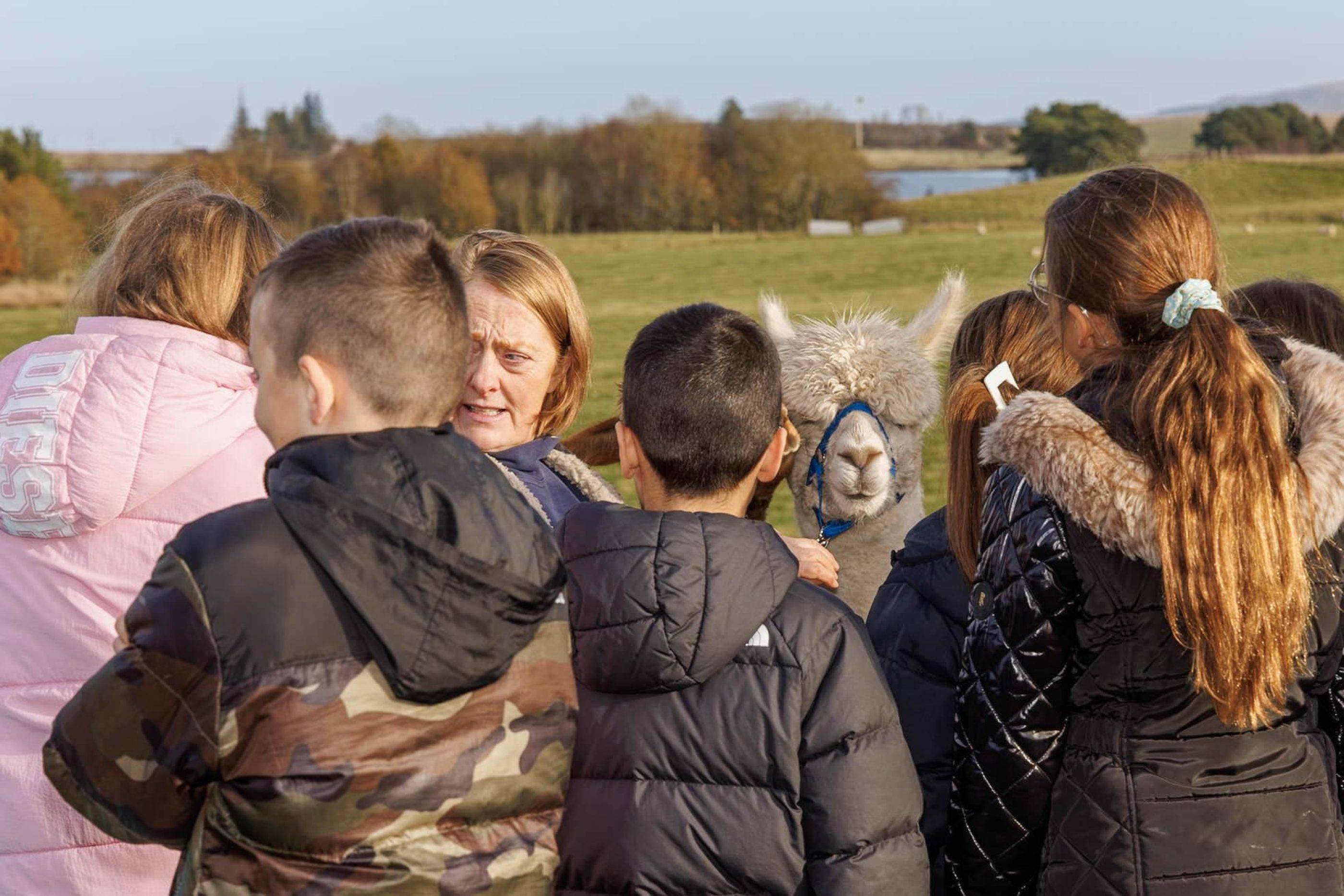
Caroline Hamilton from Cairns Farm introduced the kids to sheep fleeces, horns, and items that can be made from wool.
The kids were shown a variety of fundamental food ingredients such as wheat and barley. They learned how these any other basic food ingredients are grown and processed.
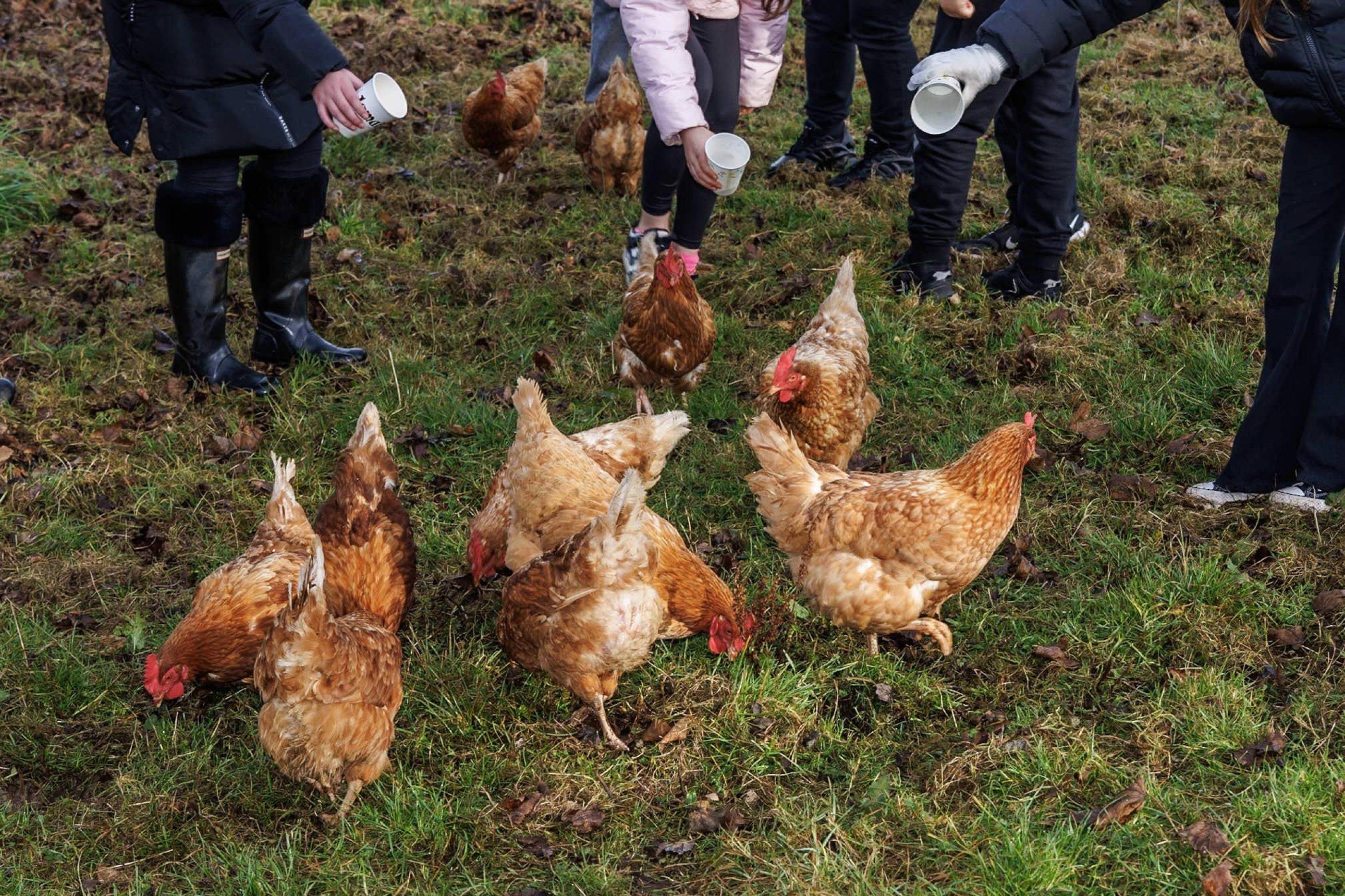
The classroom continued outside where the kids were introduced to alpacas, sheep, chickens, and a special guest appearance from the farm sheepdog.
As the whirlwind of activity drew to a close, the children washed their wellies and hands before boarding the Rabbie’s buses laden with tree seeds and worksheets, chattering excitedly about feeding the animals and exploring the farm.
As the Project L-and team tidied up there were many comments about how receptive the children had been to the experience, and a tangible sense of having sparked an interest in nature-friendly farming. We all learned a lot and are looking forward to further refining our education techniques to make our next event even better.